Thought Process: From Ideation to Execution
Published on
Reading Time
5 mins


Thought Process
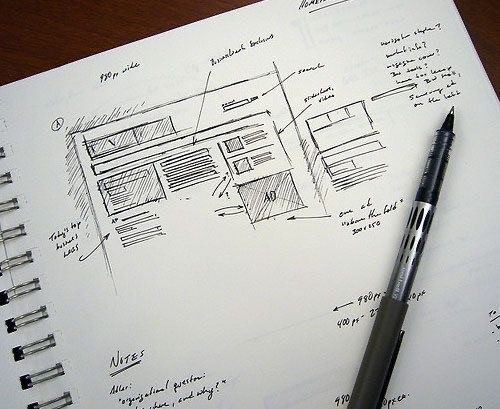
I usually tell myself that the most underrated achievement in any design process isn't the final screen. It's the clarity that exists behind it. When ideation is done right, execution stops being a leap of faith and it becomes a logical sequence. With decisions are already made, arguments already settled, what remains is the craft of bringing them to life with precision.
Across every project where this process has been applied rigorously, the results have been consistent. Timelines are shorter now because there is less backtracking. Stakeholder alignment comes faster because the thinking is documented with actual reasoning, not just assumed. Engineering teams ship with fewer questions because the rationale behind every decision travels with the design file, not just me, the designer.
Perhaps most importantly, a disciplined ideation-to-execution process changes the quality of creative risk-taking and then, constraints become the conditions for better ideas, not barriers to them.
Conclusion
The gap between a good idea and a good product is almost always a process problem, not a talent problem. The design industry has no shortage of creative thinking. What it consistently underinvests in is the infrastructure that carries that thinking from a whiteboard to a shipped experience without losing its integrity along the way.
Ideation without execution discipline produces concepts that never find their form. Execution without ideation discipline produces products that are technically complete but spiritually empty (i.e functional objects that solve the brief but miss the point). The only way to close that gap is to treat both ends of the process with equal seriousness and to build the connectivity between them deliberately.
The process is never finished. Every project teaches you something the previous one didn't. Every brief surfaces a constraint that forces the process to evolve. The goal is not a perfect process. The goal is a process that produces better outcomes every time it runs.